
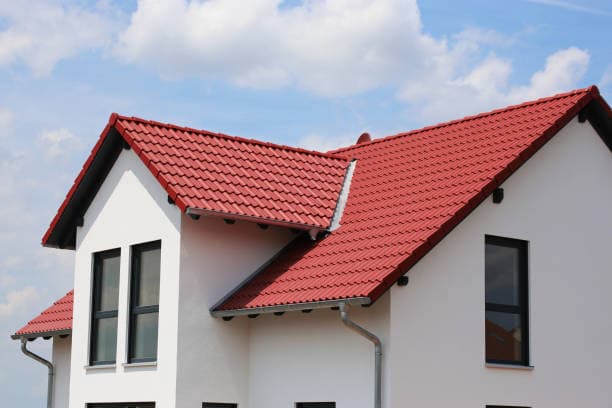
Roofing Contractor in Reston, VA
Reston has the strictest roof design review in Northern Virginia. Getting the approval right matters as much as getting the installation right.
Roofing Services in Reston, Virginia
Reston is a planned community founded in the 1960s, and it was designed around a set of covenants that still govern how the place looks. Those covenants are the single most important thing to understand about replacing a roof here. In most of Northern Virginia, design approval is a formality or absent entirely. In Reston it is a substantive review with published standards, and a roof installed without it can be required to come off.
Reston is in Fairfax County, not Loudoun County — a distinction worth stating plainly because it is commonly got wrong, including by contractors. The building permit goes through Fairfax County. The design approval goes through Reston Association, and increasingly through your individual cluster as well.
The architecture is also genuinely unusual. Reston was built with a contemporary design vocabulary rather than the colonial revival that dominates the surrounding suburbs, which means low-slope and shed roofs, unconventional geometry, dark and muted material palettes, and townhouse clusters where the roof runs continuously across several homes. Those are different roofs from a 1990s Fairfax colonial, and they fail in different ways.
Fairfax County Permits Plus Reston Design Review
Jurisdiction: Fairfax County (Land Development Services) for the permit; Reston Association for design approval
Reston is unincorporated, so there is no town hall. The building permit and inspection for a residential re-roof run through Fairfax County Land Development Services under the Virginia Uniform Statewide Building Code. We file it under our contractor license and schedule the inspection.
That permit, however, is only half the approvals. Reston Association covenants require design review approval for exterior modifications, and roof material and colour are explicitly within scope. Reston maintains design guidelines that specify what is acceptable, and the approved palette is narrower than most homeowners expect — the community's original design intent favoured dark, muted, recessive colours that sit back against the tree canopy rather than standing out, and that intent is still enforced.
These are two separate approvals from two separate bodies. A Fairfax County permit does not satisfy Reston Association, and Reston Association approval does not satisfy the county. Neither waives the other. The design review body meets on a schedule, so the approval calendar drives the project timeline, not material availability.
The consequence of skipping this is more serious in Reston than almost anywhere else. Because the covenants run with the property, an unapproved roof is a covenant violation attached to your title, and the remedy can be replacing a roof you have just paid for. We will not order material for a Reston property before design approval is in hand.
- Confirm the property is within Reston Association and identify which cluster it belongs to.
- Pull the current Reston design guidelines and the approved material and colour options that apply.
- Submit the design review application, and any separate cluster-level submittal, before ordering anything.
- File the building permit with Fairfax County Land Development Services.
- Install once both approvals are in hand, then close out the county inspection.
Reston Villages and Clusters
Reston is organised into villages, and within them into clusters — small groupings of homes with their own association and, frequently, their own additional standards. Your cluster matters as much as your village.
Lake Anne
The original 1960s core, with the most distinctive modernist architecture in Reston. Low-slope and flat roof areas are common, and design sensitivity here is at its highest.
Hunters Woods
Late 1960s and 1970s homes and townhouse clusters under heavy tree cover. Continuous shared roof planes across attached units are widespread.
Tall Oaks
1970s development with mature canopy. Debris loading and moss on shaded slopes are constant maintenance factors here.
South Lakes
1970s and 1980s mix of single-family and cluster housing around the lakes, with contemporary rooflines and varied pitches.
North Point
Later 1980s and 1990s development. More conventional pitched roofs than the original Reston core, though still under Reston Association design review.
Reston Town Center area
Higher-density and mixed-use buildings with low-slope membrane roofing, where the roof is association or commercial property rather than individually owned.
The Design Review Board and Your Cluster
Reston's design review exists to keep the community visually coherent, and roof colour is one of the most visible variables there is. The practical effect is that your choice is made from an approved set rather than from a manufacturer's full range. Homeowners who arrive with a colour picked from a brochure are frequently surprised, and the surprise is much cheaper before the order than after it.
There is usually a second layer. Individual clusters within Reston often maintain their own standards on top of the association guidelines, and in some clusters the roofs are treated as a shared element with an expectation that adjoining units match or replace together. For attached homes on a continuous roof plane, replacing one unit in isolation may not be permitted at all — a partial replacement leaves a visible seam and a colour mismatch across a single roof.
That cluster-level coordination is the most under-appreciated part of a Reston roof project. It can mean your replacement is really a joint project with neighbours, needing agreement on timing, material, and cost sharing. It takes longer to organise, but it produces a roof plane that is consistent and an approval that will not be challenged later.
We handle Reston projects by resolving all of this before any material is ordered: confirm the cluster, pull the current guidelines, prepare the association submittal and the cluster submittal, and only then talk about installation dates. It is slower at the front end and faster overall.
[[TODO: Carlos to confirm]] — if we have completed Reston Association design-review-approved roofs, particularly any cluster-wide replacements, we should note the cluster and add owner-approved photographs. Demonstrated experience with the Reston approval process is the strongest signal we can give this market.
Contemporary Architecture Means Different Roofs
Reston was built from the mid-1960s onward with a deliberately contemporary design language, and that shows up structurally. Shed roofs, low-slope sections, and unconventional intersecting planes are far more common here than in the colonial-revival suburbs nearby. Low-slope roof areas are not shingle roofs — they are membrane systems, and they fail at seams, terminations, and drainage points rather than by wearing out in the field. A Reston house can genuinely need two different roofing systems on one building.
Cedar shake was used in parts of Reston in the original construction era. Where it survives, converting to asphalt is a substantially larger job than the square footage implies, because shake was often laid over spaced skip sheathing and the deck has to be properly sheathed first. It is also a change in appearance, which puts it squarely in front of design review.
Townhouse clusters are the other structural signature. Rows of attached homes frequently share one continuous roof plane, so the roof is a shared physical asset whatever the paperwork says. Flashing at party wall intersections is a permanent vulnerability on these, and work on one unit affects its neighbours.
The tree canopy is central to Reston by design — the community was planned to preserve it — and it has the same double effect it has elsewhere in Fairfax County. Shade slows the thermal ageing of shingles, but it keeps them damp, so moss and algae growth on north-facing slopes is common and debris packs valleys and gutters continuously. On the low-slope sections that Reston has in abundance, blocked drainage is not a maintenance annoyance; it is how those roofs fail.
The later North Point-era housing is more conventional in construction, with ordinary pitched asphalt assemblies, though still subject to the same design review. Ventilation shortfalls at the soffit are the usual hidden factor shortening shingle life on those homes.
Storms, Trees, and Low-Slope Vulnerability
Reston sits in the standard Northern Virginia storm track, taking summer thunderstorm systems from the west with straight-line wind as the dominant damage mechanism. The June 2012 derecho remains the benchmark event, with widespread wind damage and extended power outages across the region.
Reston's preserved tree canopy makes falling limbs the leading emergency here rather than wind-lift. A limb strike punctures the roof rather than loosening it, so water enters immediately and the response has to be same-day. On the low-slope sections, an impact is worse than on a pitched roof: a punctured membrane over a flat deck means water pools at the breach instead of running off.
Those low-slope areas are the Reston-specific vulnerability generally. They depend entirely on drainage, and under a heavy canopy drainage is under continuous assault from leaves and debris. A blocked drain on a low-slope Reston roof leads to ponding, ponding leads to seam stress, and seam failure leads to an interior leak. Keeping those areas clear is not optional maintenance on this housing stock.
Hail does its usual delayed damage to asphalt shingles — mat fracture without immediate leaking, then failure years early, typically long after the storm can be claimed. In winter, snow sits on low-slope sections rather than sliding off, and where attic insulation is thin the meltwater refreezes at cold edges and backs up. Freeze-thaw cycling then works on the membrane terminations and flashing joints that these roofs rely on.
Storm damage is time-sensitive. See our storm damage response or read how we handle insurance claims.
Close By, and Familiar With the Approval Process
Our office is in Ashburn, a short run down the Dulles corridor to Reston. More important than the drive time is the paperwork: we know that Reston is Fairfax County for permitting, that Reston Association design approval is a separate and binding requirement, and that the cluster may impose a third set of standards.
Being nearby also means we can get to a limb strike or a leaking low-slope section the same day, which on a flat roof where water pools rather than runs off is the difference between a membrane repair and a ceiling replacement.
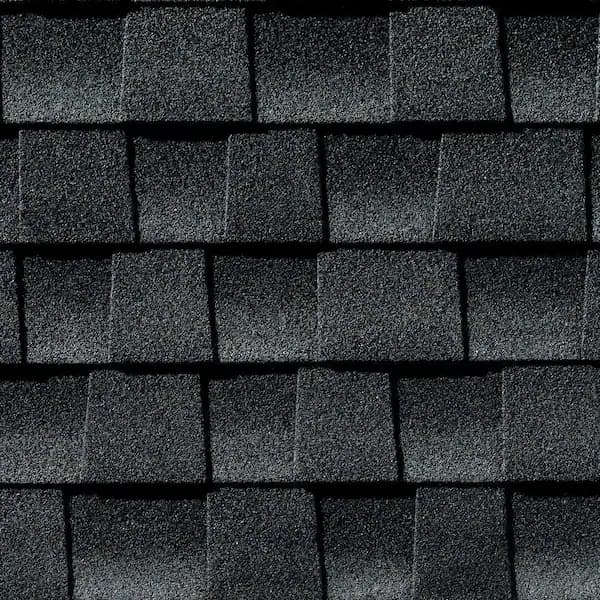
Our Reston Roofing Services
We handle both the pitched and the low-slope roofs Reston houses actually have, and we run the design review submittal as part of the job rather than leaving it to you.
Roof Replacement
Design-review-compliant replacement using approved Reston colours and materials, including cluster-wide coordination where required.
Commercial & Low-Slope
Membrane systems for the low-slope and flat roof sections that Reston's contemporary architecture is full of.
Roof Repair
Repairs at party wall flashing, membrane seams and terminations, and the drainage points where low-slope roofs actually fail.
Storm Damage
Same-day response to limb strikes, which are the leading roofing emergency under Reston's preserved tree canopy.
Reston Roofing Questions
- Is Reston in Loudoun County?
- No. Reston is in Fairfax County, and this is a common enough error that it is worth being explicit about. Building permits for Reston roof work go through Fairfax County Land Development Services. If a contractor tells you your Reston permit goes through Loudoun County, that is a sign they do not work here.
- Do I need Reston Association approval to replace my roof?
- Yes, in essentially all cases. Reston Association covenants require design review approval for exterior modifications, and roof material and colour are within scope. This is separate from the Fairfax County building permit, and neither approval substitutes for the other. We will not order material before design approval is in hand.
- Can I choose any shingle colour in Reston?
- No. Reston's design guidelines specify acceptable materials and colours, and the approved palette is narrower than a manufacturer's full range — the community's design intent favours dark, muted colours that recede against the tree canopy. We pull the current guidelines that apply to your cluster and select from what will be approved.
- What happens if I install a roof without approval?
- It becomes a covenant violation that runs with the property, and the remedy can be replacing the roof you just paid for. Because Reston's covenants attach to the title rather than to you personally, this can also surface when you sell. It is the most expensive avoidable mistake in this market.
- My townhouse shares a roof with my neighbours. Can I replace only mine?
- Frequently not. Many Reston clusters sit on one continuous roof plane, and replacing a single unit leaves a visible seam and colour mismatch across one roof. Your cluster may require adjoining units to replace together, which makes it a coordinated project needing agreement on timing, material, and cost sharing.
- Part of my Reston roof is flat. Is that a different job?
- Yes, a different system entirely. Low-slope and flat sections are membrane roofing, and they fail at seams, terminations, and drainage points rather than by wearing out in the field. Many Reston houses genuinely need two roofing systems, and a quote that prices the whole building as shingle work has missed something.
- Why do the low-slope sections need so much attention?
- Because they rely completely on drainage, and Reston's preserved tree canopy drops debris onto them continuously. A blocked drain leads to ponding, ponding stresses the seams, and seam failure puts water inside. On this housing stock, keeping the low-slope areas and their drains clear is a functional requirement rather than cosmetic upkeep.
Nearby Service Areas
Start Your Reston Roof the Right Way
We confirm your cluster, run the Reston Association design review submittal, and pull the Fairfax County permit — then we install.