
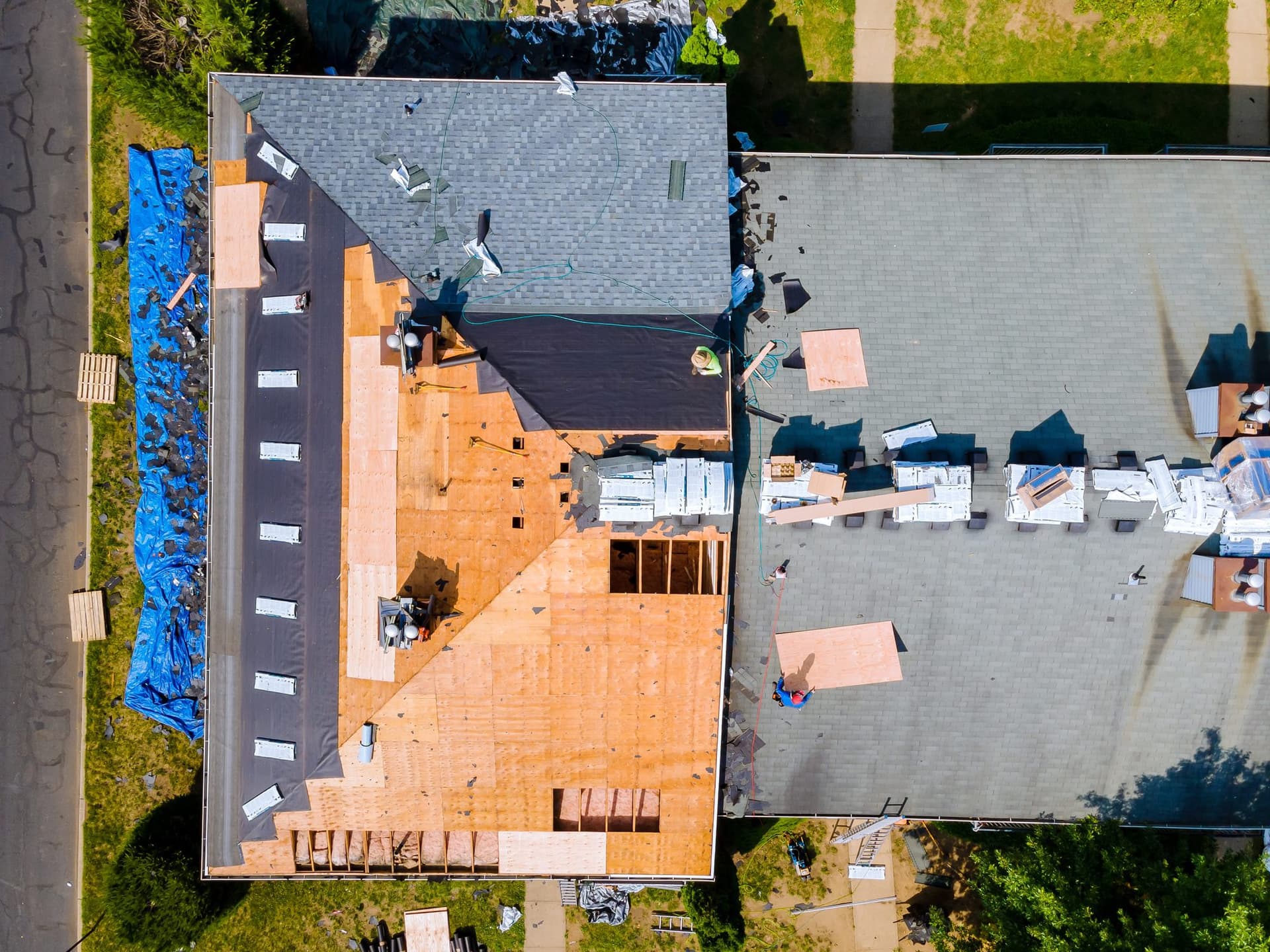
Roofing Contractor in Fairfax, VA
Fairfax covers seventy years of construction and the heaviest tree canopy in the region. Both facts shape what your roof needs.
Roof Repair and Replacement in Fairfax, Virginia
Fairfax has the widest spread of construction eras of anywhere we work. Mid-century ramblers and split-levels from the 1950s and 1960s sit a few minutes from 1970s and 1980s colonials, which sit a few minutes from 2000s houses on larger lots. There is no single Fairfax roof, and the useful diagnosis depends much more on which decade your house was built than on the city name on your mail.
One jurisdictional note first, because it causes real confusion. The City of Fairfax is an independent city with its own permitting, separate from Fairfax County which surrounds it. A great many addresses that say "Fairfax, VA" are actually in unincorporated Fairfax County, not inside the city limits. Which one applies to you determines where the permit goes, and it is the first thing to establish.
The other thing that defines roofing in Fairfax is trees. This is the most heavily canopied part of Northern Virginia, with mature hardwoods over a large share of the residential streets. Tree cover materially changes how roofs age here, and it introduces failure modes that barely register in the newer, more open Loudoun County developments.
Fairfax County or City of Fairfax?
Jurisdiction: Fairfax County (Land Development Services), or the City of Fairfax if inside city limits
Most homes with a Fairfax mailing address are in unincorporated Fairfax County, where the county's Land Development Services handles building permits and inspections under the Virginia Uniform Statewide Building Code. Homes inside the corporate limits of the City of Fairfax go through the city's own permit office instead. Both enforce the same code; the office, the queue, and the inspector differ.
We confirm which jurisdiction applies by address before filing. It is a two-minute check that prevents a permit landing in the wrong queue and adding a fortnight to the project.
On the inspection itself, the post-tear-off look at the exposed deck is where a Fairfax roof is genuinely evaluated. That varies a great deal by construction era here. On a 1950s or 1960s rambler you may find board sheathing, a shallow pitch, and evidence of two previous re-roofs. On a 1990s colonial you will find plywood or OSB in reasonable condition and the real question is ventilation. The same contractor should not be quoting both from the driveway.
The statewide layer rule applies: where two applications of roof covering already exist, no further overlay is allowed and the roof must be stripped to the deck. Given that a substantial share of Fairfax housing is fifty to seventy years old, tear-off is frequently the required approach rather than an optional upgrade.
- Confirm by address whether the property is in Fairfax County or inside the City of Fairfax.
- Inspect the roof and the attic, and identify the construction era so the scope reflects what is actually up there.
- Assess tree-related factors — overhanging limbs, debris loading, moss and algae on shaded slopes.
- File the permit with the correct jurisdiction under our contractor license.
- Tear-off, deck repair, installation with corrected ventilation, then the closing inspection.
Fairfax Neighborhoods We Serve
These are the Fairfax areas we work in most, arranged roughly by era. The construction decade is the most reliable predictor of what your roof needs.
Mantua
Mid-century homes on generous, heavily wooded lots. Shallow-pitched sections, mature tree debris, and decks that have been re-roofed more than once.
Kings Park West
1960s and 1970s split-levels and colonials under substantial canopy. Moss on shaded north slopes and blocked valleys are the recurring maintenance issues.
Little River Hills
Established mid-century neighborhood with large trees close to the houses. Limb impact damage after summer storms is a regular call here.
Old Town Fairfax
Inside the City of Fairfax, so permitting goes through the city rather than the county. Older housing near the historic centre with more varied roof geometry.
Fairfax Station
Larger homes on larger lots, generally 1980s onward, with steeper and more complex rooflines. More valleys and transitions to flash properly.
Fair Lakes, Fair Oaks & Penderbrook
Late 1980s through 1990s development including townhome and condominium sections, where the roof is often association property rather than individually owned.
Associations, Attached Roofs, and Who Owns What
Fairfax is mixed on design review. The older mid-century neighborhoods — Mantua, Little River Hills, much of Kings Park West — largely predate mandatory homeowners associations, so single-family owners there can usually choose roof material and colour without submitting to a committee. That is a genuine advantage of the older Fairfax stock.
The planned communities are different. Fair Lakes, Fair Oaks, Penderbrook, Fairfax Station's newer sections, and the many townhome developments all have associations, and most maintain approved material and colour standards for roofing. Approval there is required before material is ordered, and committees typically meet on a set schedule rather than on request.
Attached housing is where this matters most. Fairfax has a large stock of townhomes and condominiums, and in those the roof is frequently either association-owned common element property or a continuous plane shared across several units. In a condominium, an individual unit owner generally cannot commission roof replacement at all — it is a board decision funded from reserves or a special assessment. For townhouse rows, the association usually requires consistency across the shared plane, which means neighbouring owners may need to replace together.
We establish who actually owns the roof before we scope anything. It is a short conversation that saves people from paying for an estimate on work they have no authority to order.
Seventy Years of Fairfax Roofs
The 1950s and 1960s stock — the ramblers and split-levels in Mantua, Little River Hills, and similar neighborhoods — is the most distinctive. These are often shallow-pitched roofs, and shallow pitch is significant: water drains slowly, so underlayment quality and flashing detail carry more of the burden than they do on a steep roof, and debris that collects does not wash off. Underneath, board sheathing is common, as is a history of layered re-roofs and patched flashing.
The 1970s and 1980s houses are the transitional group. Plywood decking, conventional pitches, and frequently a second-generation shingle that is now itself at end of life. Cedar shake shows up on some homes of this era in Fairfax County, and a shake-to-asphalt conversion is a much larger job than the square footage suggests, because shake was often laid over spaced skip sheathing and the roof has to be properly sheathed first.
The 1990s and 2000s stock in Fairfax Station, Fair Lakes, and Penderbrook is conventional modern construction. The recurring defect there is not the shingle but the ventilation: ridge vent installed without adequate soffit intake, which drives attic temperatures up and shortens shingle life regardless of the product. That is correctable during a replacement and worth doing.
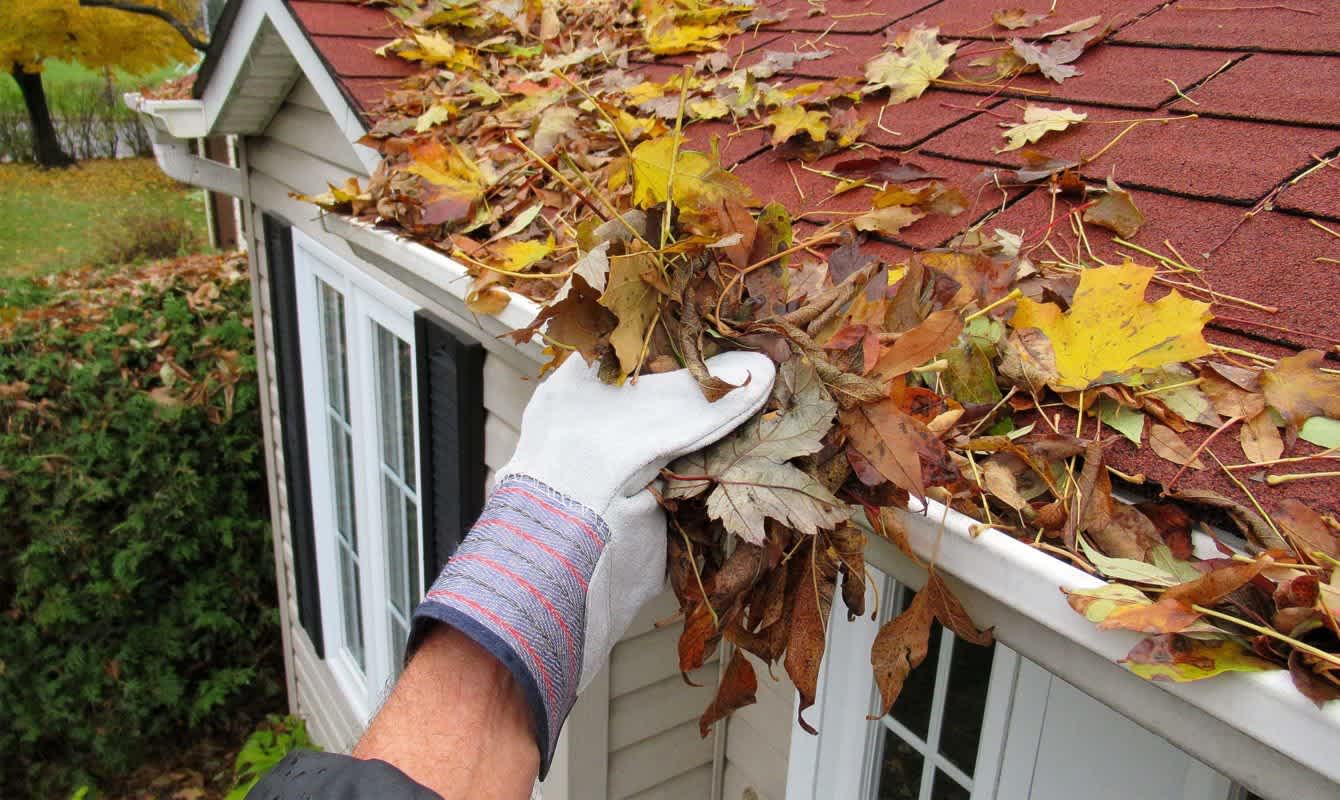
Across all eras, the common Fairfax factor is the tree canopy. Organic debris packs valleys and gutters so water backs up under the shingles; moss and algae hold moisture against north-facing slopes; and overhanging limbs abrade the surface in wind and come down in storms. Roofs in Fairfax do not reach the service life printed on the wrapper unless the valleys and gutters are actually kept clear. On the shallow-pitched mid-century roofs, this is not a cosmetic issue — it is the primary cause of premature failure.
Storms Under a Heavy Canopy
Fairfax gets the standard regional pattern of summer thunderstorm complexes moving in from the west, with straight-line wind as the leading cause of roof damage. The June 2012 derecho is the event most Fairfax homeowners still measure against, producing widespread wind damage and extended outages across Northern Virginia.
The tree canopy changes what that wind does. In heavily wooded neighborhoods, the trees absorb some direct wind loading on the roof, but they substitute a more violent hazard: limbs and whole trees coming down. Impact damage punctures rather than lifts, it is localised and obvious, and it is genuinely urgent because the roof envelope is broken rather than merely loosened. A large share of our emergency calls in Fairfax are impact events, not wind-lift events.
The same canopy shades roofs, which slows the thermal ageing of shingles — a real benefit — while simultaneously keeping them damp. Damp, shaded shingles grow moss and algae, and moss holds water against the roof surface and lifts shingle edges as it thickens. This is why two identical houses in Fairfax, one under trees and one in the open, can be in very different condition at the same age.
Hail arrives with the same storms and does its usual delayed damage: mat fracture without immediate leaking, granule loss over the following seasons, and failure years early — typically well after the claim window for that storm has passed. In winter, freeze-thaw cycling works on flashing joints and ageing pipe boots, and on the shallow-pitched mid-century roofs snow sits rather than sliding, which raises the risk of ice damming at the eaves where attic insulation is thin.
Storm damage is time-sensitive. See our storm damage response or read how we handle insurance claims.
A Short Run Down the Corridor
Our office is in Ashburn, and Fairfax is a straightforward run down the Dulles corridor. We work in Fairfax County regularly enough to be familiar with how the county handles residential re-roof inspections, and to know to check whether an address is actually inside the City of Fairfax before filing anything.
Being close also means we can respond to a limb strike the same day. When a tree has opened up a roof, the gap between the storm and the tarp is what determines whether you are dealing with a roof repair or with insulation, ceilings, and flooring as well.
Our Fairfax Roofing Services
These are the services we perform on Fairfax homes. Tree-related damage, cedar shake conversions, and ventilation correction come up here more than anywhere else we work.
Roof Replacement
Replacement across all Fairfax eras, including shallow-pitch mid-century roofs and shake-to-asphalt conversions needing new sheathing.
Roof Repair
Repairs for limb impact punctures, blocked valleys, and the flashing failures typical of a roof that has been done more than once.
Storm Damage
Emergency response to fallen limbs and trees, which is the dominant storm damage pattern under the Fairfax canopy.
Gutters
Gutter and downspout work, which under this much tree cover is roof protection rather than an accessory.
Fairfax Roofing Questions
- Is my Fairfax address in the county or the city?
- Most addresses that read "Fairfax, VA" are in unincorporated Fairfax County, but the City of Fairfax is a separate independent city with its own permit office. The distinction determines where the permit is filed. We verify it by address before submitting anything, because a misfiled permit costs real calendar time.
- Why does my roof have moss and my neighbour's does not?
- Almost always shade. Under the Fairfax canopy, north-facing and tree-shaded slopes stay damp long enough for moss and algae to establish, and moss holds water against the shingles and lifts their edges as it thickens. Two identical houses of the same age can be in very different condition depending purely on tree cover.
- A tree limb came through my roof. What happens now?
- Call us and we will get a tarp on it, day or night. Impact damage punctures the roof envelope rather than just loosening it, so it is genuinely urgent — water is entering immediately. We document the damage for your claim and then scope the structural and decking repair, which on an impact event is usually more than a shingle patch.
- My Fairfax house has cedar shake. What does converting to asphalt involve?
- More than a standard tear-off. Wood shake was frequently laid over spaced skip sheathing rather than solid decking, so converting to asphalt shingles usually means sheathing the whole roof first. That is a substantial additional scope item and it must be priced during the estimate, not discovered after the shake is removed.
- Do I need HOA approval for a roof in Fairfax?
- It depends on the neighborhood. The older mid-century areas like Mantua and Little River Hills largely have no association design review, so the choice is yours. The planned communities — Fair Lakes, Fair Oaks, Penderbrook, and the townhome developments — do have standards and require approval before material is ordered.
- My 1960s rambler roof keeps leaking near the edges. Why?
- Shallow pitch is usually the underlying reason. A low-slope roof drains slowly and is more exposed to wind uplift and to standing debris at the eaves, so the underlayment and edge flashing take the strain rather than the middle of the roof. Under a heavy canopy, blocked valleys and gutters make it worse by holding water at exactly those points.
- I own a townhouse in Fairfax. Can I replace just my section?
- Often not independently. Many Fairfax townhome rows sit on one continuous roof plane, and the association may own the roof or require adjoining units to replace together so the plane stays uniform. In condominiums the roof is normally common element property and only the board can authorise the work. We check ownership before scoping.
Nearby Service Areas
Get a Fairfax Roof Inspection
A free inspection that accounts for your construction era and your tree cover, plus a straight answer on repair versus replacement.