
Roofing Contractor in Leesburg, VA
Leesburg is the one town in Loudoun County where your roof may need a Certificate of Appropriateness before it needs a shingle.
Roofing in Leesburg, Virginia
Leesburg is an incorporated town, and that single legal fact changes how a roof project runs here compared with anywhere else we work in Loudoun County. Properties inside the town limits deal with the Town of Leesburg. Properties in the surrounding county areas that carry a Leesburg mailing address deal with Loudoun County. Confusing the two is the most common way a Leesburg roofing project starts badly.
Layered on top of that, Leesburg has a genuine historic core. The Leesburg Old and Historic District covers much of the downtown, and exterior changes there — roofing very much included — go before the town's Board of Architectural Review. A roof in the historic district is a design review matter first and a construction matter second.
Outside the historic core, Leesburg looks more like the rest of eastern Loudoun: subdivisions from the 1980s through the 2000s, conventional framing, asphalt shingles, and active homeowners associations. Both versions of Leesburg are on this page, because a contractor who only understands one of them will get the other one wrong.
Town of Leesburg Versus Loudoun County
Jurisdiction: Town of Leesburg (inside town limits) or Loudoun County Building and Development (outside)
The first question on any Leesburg roof is whether the address sits inside the corporate town limits. Inside the town, plan review, permitting, and zoning run through the Town of Leesburg. Outside the town limits, it is the Loudoun County Department of Building and Development, even though the mailing address still says Leesburg. Both jurisdictions enforce the Virginia Uniform Statewide Building Code, so the technical standard is the same — the office, the queue, and the review process are not.
We verify the jurisdiction by address before filing anything. It sounds trivial, and it is exactly the kind of trivial thing that adds two weeks to a project when a permit lands in the wrong queue.
If the property is in the Old and Historic District, there is a second and more consequential step. Exterior alterations visible from the public right-of-way require a Certificate of Appropriateness from the Board of Architectural Review before a building permit can proceed. Roofing material and colour fall squarely inside that review. The Board meets on a published schedule, so the calendar is driven by their meeting dates rather than by when your shingles can be delivered.
Practically, that means a historic district roof replacement in Leesburg needs to be started earlier than a comparable job in Ashburn or Sterling. We do not treat that as a reason to avoid the work — it is a reason to plan the sequence properly and to submit a package the Board can approve the first time.
- Confirm by address whether the property is inside the Town of Leesburg or in unincorporated Loudoun County.
- Determine whether the property lies within the Old and Historic District or is otherwise subject to design review.
- Where applicable, prepare and submit the Certificate of Appropriateness application with material specifications and photographs.
- File the building permit with the correct jurisdiction once design approval is in hand.
- Install, then close out with the inspection required by whichever jurisdiction issued the permit.
Leesburg Neighborhoods and What They Need
Leesburg spans two and a half centuries of building. The historic core and the 1990s subdivisions are effectively different roofing markets that happen to share a town name and a zip code.
Old Town / Historic District
Eighteenth and nineteenth century buildings, many with slate or standing seam metal originally. Design review applies, materials often need to match historically, and party walls and street frontage limit staging.
Exeter
Late 1980s and 1990s single-family homes with an active association. Original builder shingles have largely aged out, making this steady full-replacement territory.
Potomac Station
1990s and early 2000s development on the north side of town. Newer decks and straightforward asphalt assemblies; issues here are usually flashing and ventilation rather than shingle age.
Tavistock Farms
Early 1990s mixed single-family and townhome sections. Shared roof planes on the attached units mean the association often has a say in scope and timing.
Woodlea Manor
Larger homes with steeper, more articulated rooflines. More valleys, dormers, and transitions, so flashing detail carries more weight than square footage.
Kincaid Forest
1990s and 2000s homes under mature tree cover, with the debris loading, moss growth, and limb impact that comes with it.
The Board of Architectural Review and Historic Roofing Materials
For a property in the Leesburg Old and Historic District, the Board of Architectural Review is looking at whether a proposed roof is appropriate to the character of the building and the district. That is a different question from whether the roof will keep water out, and it is answered by a body of appointed reviewers rather than by a building inspector.
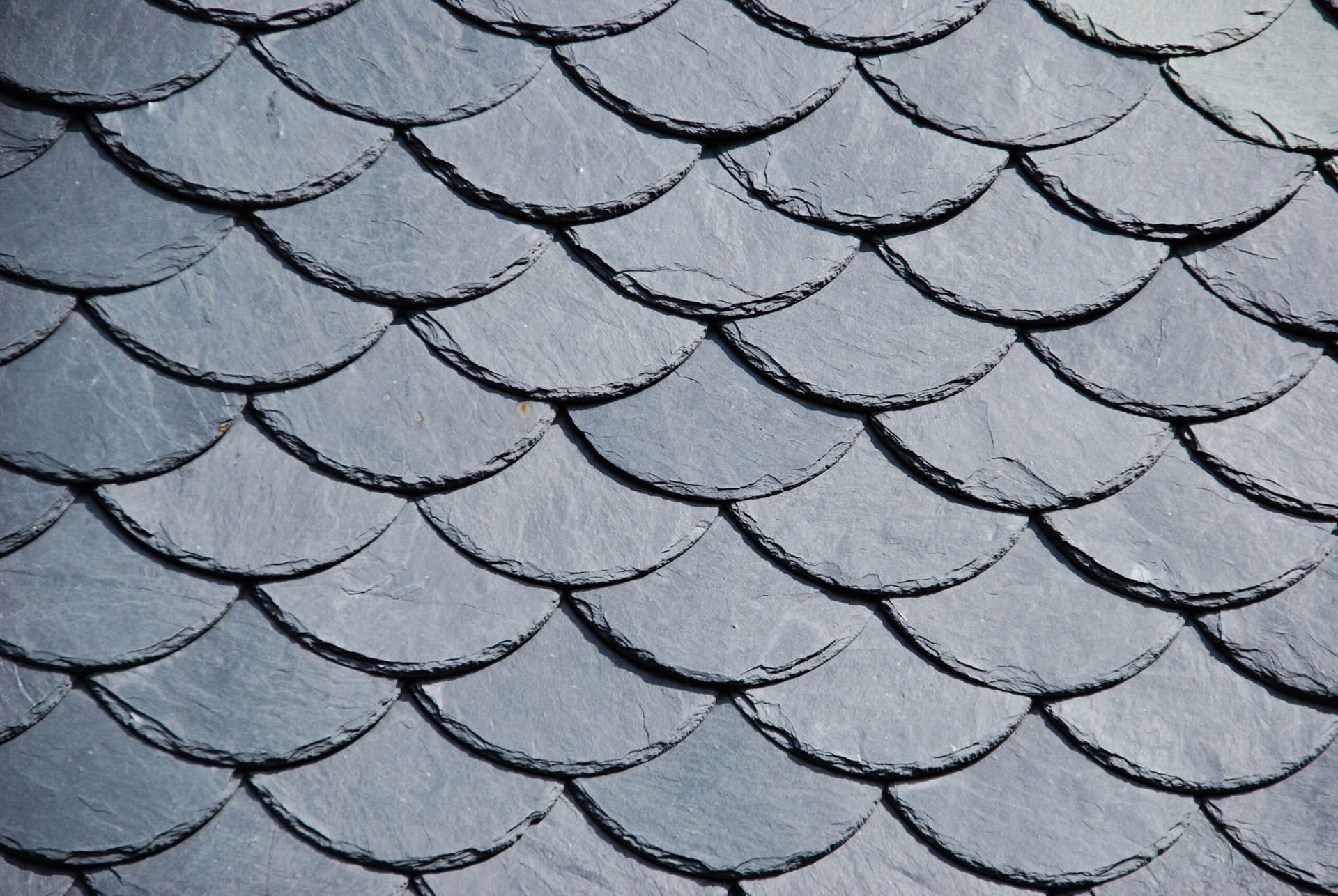
In practice this shapes material choice. A historic Leesburg building that originally carried slate or standing seam metal is generally expected to be replaced in a way that respects that appearance, and swapping a slate roof for architectural asphalt because it is cheaper is the kind of proposal that gets sent back. Where asphalt is acceptable, colour and profile still matter. Details that are invisible elsewhere — the visible edge profile, the ridge treatment, the finish on metal — become review items.
Slate and standing seam metal are also different trades from asphalt shingle work, with different labour, different lead times, and materially different cost. A Leesburg historic district roof will not price like a Potomac Station roof, and any quote that treats them the same has not understood the job.
Outside the historic district, ordinary homeowners association architectural review still applies in Exeter, Tavistock Farms, Potomac Station, and the other planned communities. That is a lighter process than the Board of Architectural Review, but it is still an approval you need before material is ordered.
[[TODO: Carlos to confirm]] — if we have completed roofs inside the Leesburg Old and Historic District, we should name the project type and, with the owner's permission, add photographs here. Historic district work is the strongest possible proof for this market and we should not describe projects we cannot substantiate.
Leesburg Housing Stock: Two Centuries Apart
The historic core contains some of the oldest occupied housing in Loudoun County. Roof assemblies there can include natural slate, standing seam metal, and low-slope sections behind parapets or between additions built in different decades. Box gutters — gutters built into the structure rather than hung from the fascia — turn up on older Leesburg buildings and are a specialised repair, not a gutter replacement. Chimneys are numerous, masonry is old, and chimney flashing is a frequent source of water intrusion.
Additions are the other historic-core complication. A downtown Leesburg building may have three or four roof planes added across different eras, meeting at transitions that were never detailed well. Water finds those transitions. Diagnosing a leak on a building like that is investigative work rather than a visual scan from the driveway.
The subdivisions tell a much simpler story. Exeter, Tavistock Farms, Woodlea Manor, and Kincaid Forest are conventional plywood-decked asphalt shingle roofs from the late 1980s through the 2000s, and the earlier ones are now at or past the end of their original shingles. Ventilation shortfalls at the soffit are the usual hidden factor shortening their life, exactly as they are elsewhere in the county.
Because Leesburg contains both extremes, the useful question is not what roofs cost in Leesburg but what your specific building is. The answer for a Federal-era brick house on a downtown street and a 1994 colonial off Battlefield Parkway are not close to each other.
Weather at the Foot of the Blue Ridge
Leesburg sits further west than the rest of the communities we serve, closer to the Blue Ridge and the Catoctin ridgeline, and that changes the storm picture slightly. Thunderstorm complexes crossing the mountains often reach Leesburg first, before they track east toward Ashburn and Sterling, and they can arrive with the strongest part of their wind field intact.
Straight-line wind and hail are the two damage mechanisms that matter. The June 2012 derecho remains the benchmark event for the region, producing widespread wind damage across Northern Virginia, but ordinary summer storms deliver smaller versions of it most years. Hail bruising fractures the shingle mat without leaking straight away, so it is routinely missed until the roof fails years early — well after the claim window for the storm that caused it has closed.
Historic buildings respond to weather differently from modern ones. Slate is very durable but individual slates crack under hail and limb impact, and a cracked slate lets water into a deck that may be original. Standing seam metal handles wind well but relies on its seams and fasteners, and older panels can loosen. Neither material forgives deferred maintenance, and on a historic Leesburg building the deck underneath is not something you want to find out about late.
Winter brings freeze-thaw cycling that works on masonry chimney flashing and on the old mortar these buildings depend on. On the low-slope and box-gutter sections common downtown, ice buildup is a genuine risk because there is nowhere for meltwater to go.
Storm damage is time-sensitive. See our storm damage response or read how we handle insurance claims.
Close Enough to Handle the Town Process Properly
Leesburg is a short drive from our Ashburn office, in the same county, and we work in the town regularly enough to know that the town-versus-county distinction is the first thing to settle and that the Board of Architectural Review calendar drives everything downtown.
That familiarity is most valuable when something is leaking. Being twenty minutes away means an emergency tarp goes on the night of the storm, which on an old Leesburg building with original interior finishes is the difference between a roof repair and a much larger restoration.
Our Leesburg Roofing Services
We cover both the historic core and the modern subdivisions. Historic district projects run on a longer timeline because of design review, and we scope them that way from the start.
Roof Replacement
Full replacement for Leesburg subdivisions, and design-review-compliant replacement inside the historic district.
Roof Repair
Leak investigation on downtown buildings with multiple additions, aged chimney flashing, and low-slope transitions.
Storm Damage
Wind and hail response for Leesburg's more westerly exposure, including cracked slate and loosened metal panels.
Gutters
Gutter and downspout work. Note that historic box gutters are a separate, specialised repair from hung gutters.
Leesburg Roofing Questions
- Do I need a Town of Leesburg permit or a Loudoun County permit?
- It depends on whether your property is inside the corporate town limits. Inside the town, the Town of Leesburg handles permitting and zoning. Outside the limits, it is the Loudoun County Department of Building and Development, even if your mailing address says Leesburg. We verify the jurisdiction by address before filing anything.
- What is a Certificate of Appropriateness and do I need one?
- It is the approval issued by the Town of Leesburg Board of Architectural Review for exterior changes in the Old and Historic District. If your property is in the district and the roof is visible from the public right-of-way, you generally need one before a building permit can proceed. Roofing material and colour are both within the Board's review.
- How much longer does a historic district roof take in Leesburg?
- The construction is not slower; the approval is. The Board of Architectural Review meets on a published schedule, so your timeline is set by their meeting dates and by whether the submittal is complete enough to approve on the first pass. We start the application early for exactly this reason and sequence the permit behind it.
- Can I replace a slate roof with asphalt shingles in Old Town Leesburg?
- Not as a matter of course. In the historic district the Board considers whether a proposed material is appropriate to the building and the district, and replacing slate with asphalt purely on cost grounds is the kind of change that gets questioned. Where asphalt is acceptable, profile and colour still matter. We scope historic work around what is likely to be approved.
- What are box gutters and why are they a problem?
- Box gutters are built into the structure of older buildings rather than hung from the fascia, and several downtown Leesburg buildings have them. They fail internally, often into the wall or cornice rather than visibly outside, and repairing them is specialised carpentry and lining work rather than a gutter swap. They should be priced separately.
- My Leesburg house is in a 1990s subdivision. Is any of this relevant?
- The historic district part is not. You will have a conventional plywood-decked asphalt roof, an active homeowners association whose architectural review you need before ordering material, and a permit from whichever jurisdiction covers your address. Homes in Exeter and Tavistock Farms are largely at the point of first or second replacement now.
- Does hail damage slate?
- Yes. Slate is far more durable than asphalt overall, but individual slates crack under hail and falling limbs, and a cracked slate admits water to a deck that on an old Leesburg building may be original material. Slate damage is also easy to miss from the ground, which is why a post-storm inspection matters more, not less, on a historic roof.
Nearby Service Areas
Talk to Us About Your Leesburg Roof
We will confirm your jurisdiction, tell you whether design review applies, and scope the work on a realistic timeline rather than an optimistic one.